
Duval County Busted Mugshot Basics
A Duval County booking photo is just an ID picture. It gets taken when someone is processed into jail. The Jacksonville Sheriff's Office, known locally as JSO, builds the booking record once an arrest reaches the John E. Goode Pretrial Detention Facility. Jacksonville's consolidated government blurs the usual lines. JSO can arrest you and run the jail at the same time. The split is cleaner in Jacksonville Beach or Atlantic Beach. There, the local police department keeps the incident report. JSO holds the county booking record and the photo tied to it.
Florida law opens most nonexempt agency records to anyone who wants to look or copy. That openness has limits, though. Victim information, shielded addresses, medical details, juvenile material, active investigative files, and sealed items can all be withheld or blacked out under whichever statute covers them.
When Duval Mugshots Become Visible
An arrest in Duval County does not put a mugshot online right away. JSO works through a longer sequence first. It covers property inventory, medical screening, cell assignment, and identification clearance. Booking sits inside that flow. The agency says clearance moves as fast as it can, but promises no fixed posting window. Someone can be sitting at John E. Goode while a public search still returns nothing useful.
A blank search is not the end of the road. Check the spelling first. Try other identifiers too, then wait a bit and search again. Widen the net by dropping the active-in-jail filter, since the person may have left local custody quickly. A blank result can mean several things: timing, confidentiality, sealing, a portal limit, or a name mismatch. It does not settle the question. When the record stays hidden, a focused JSO request is the smart fallback.
The JSO corrections overview lays out the intake role of John E. Goode and every step that comes before a custody record settles.
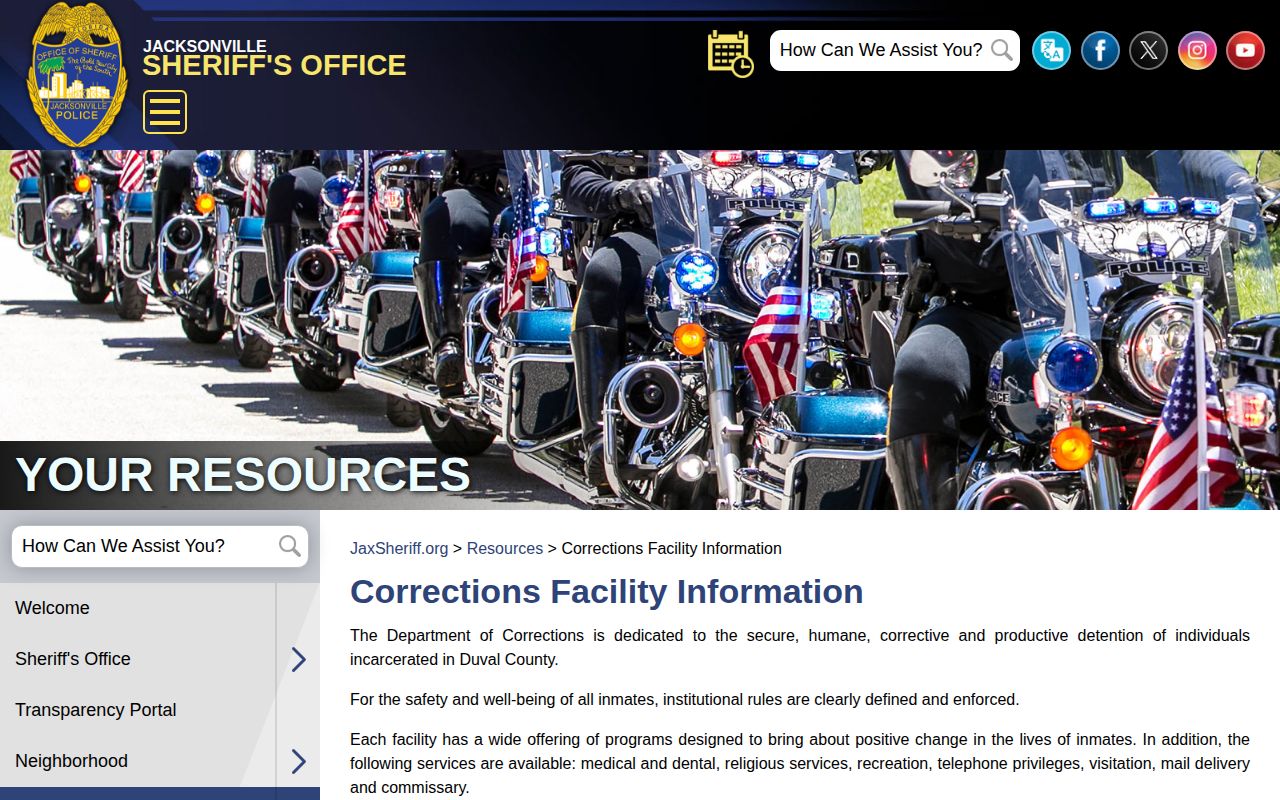
That official overview explains why an empty result right after an arrest is common and rarely means no booking ever happened.
Inside a Duval Booking Record
A booking record on the public portal can hold a mix of details: identity facts, intake information, alleged charges, custody status, and court-related fields. Not every booking fills in every box. The fuller arrest file may run deeper than the roster card the public sees. It can include an intake form, a booking card, an affidavit, details about the officer and the place of arrest, and a probable-cause summary. Anything protected gets redacted before a copy is released.
| Field | What it can show |
|---|---|
| Jail number and JSO ID | Stable identifiers used to separate people with similar names. |
| Identity details | Name, age or birth information, sex, race, and physical descriptors as populated. |
| Booking facts | Booking date and time, arresting agency, facility, and status. |
| Charges | The statute, level, description, jurisdiction, and status entered at intake. |
| Bond and holds | Release conditions, total bail, holds, or related comments where shown. |
| Court and release | Next court date, department, scheduled release, release status, or visitation data. |
| Booking photograph | The image JSO associated with that intake when a public photo is available. |
Read each field with its own clock. Bond sets a release condition, nothing more. A release date says nothing about dismissal. Court dates shift without warning. Do not lean on the photograph as the identity test, because names and faces get crossed. Match on the jail number instead, plus the JSO ID, date, age, and arresting agency.
Request Duval Busted Mugshot Records
Start with the free online view. Send a narrow request when a record is old, an original image is wanted, or a field is missing from the portal. That request goes to the JSO Public Records Unit. JSO takes requests four ways: online, by phone, by mail, or at a public counter. Florida's ordinary public-record rules do not ask you to state a purpose.
- Collect the full booking name, event date, jail number, JSO ID, and date of birth when appropriate.
- Ask for the arrest and booking record plus the original booking photograph tied to that event.
- State that an electronic copy is acceptable if that meets the need, and ask for a written estimate before costly work begins.
- Review redactions and identifiers when the response arrives. Use the Clerk's docket for later court action.
501 E. Bay Street
Jacksonville, FL 32202
904-630-2209
Telephone hours: Monday through Friday, 8 a.m. to 4:30 p.m.
Copy fees run $0.15 for a single-sided page and $0.20 for a two-sided one, per JSO's routine rates. Treat those as page prices, not a mugshot price. Heavy search work, redaction, media, or format choices can all move the estimate. JSO sets no fixed turnaround for booking photos. Counters handle requests under 30 minutes. Still, that is no guarantee a mugshot request wraps up on the spot.
The official request page is the fallback whenever a Duval County busted mugshot or its booking record does not surface through search.
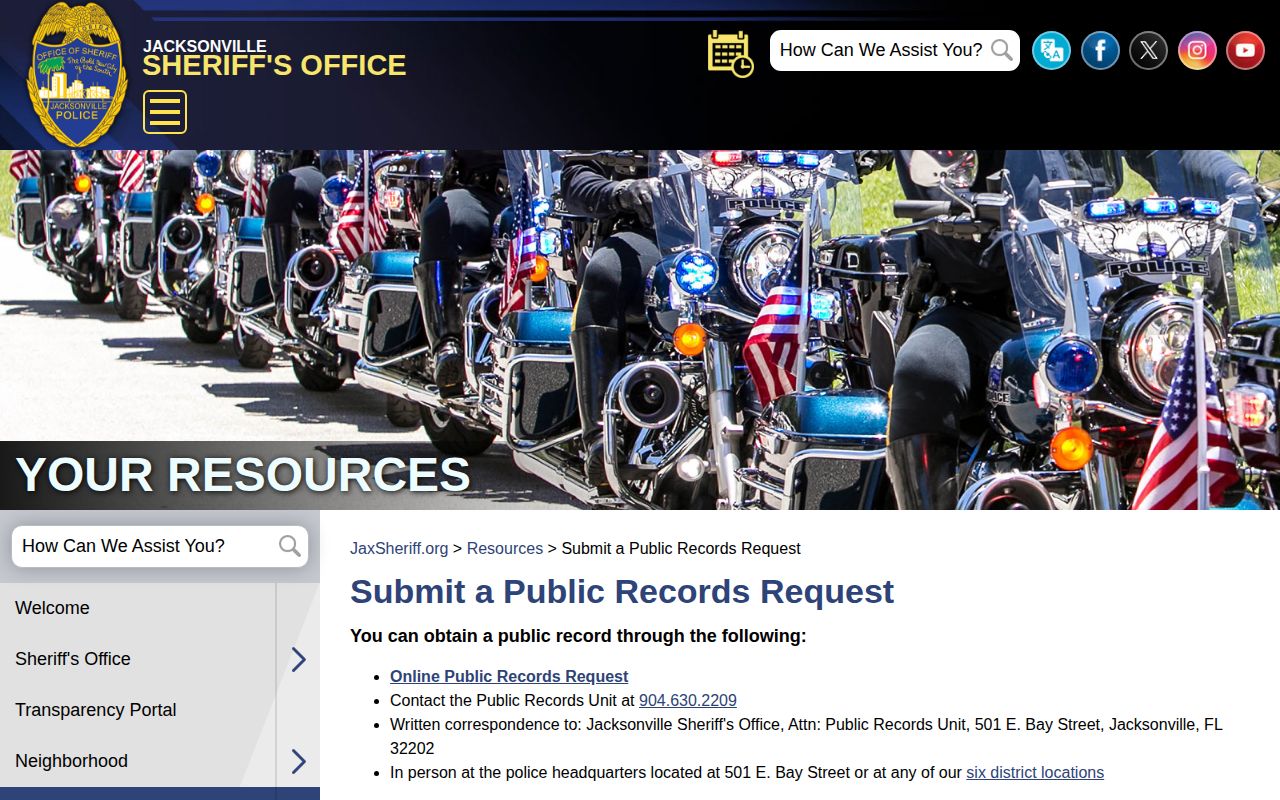
A tight, specific request cuts search time and helps the custodian avoid pulling records for the wrong person.
Florida Law on Busted Mugshots
Want a busted mugshot taken down in Florida? Start with Chapter 119, the state's public-records law. The key provision is Florida Statutes section 901.43. That statute covers certain commercial publishers of booking photographs. Under it, a covered publisher cannot charge to pull a photo. The person pictured, or a legal representative, mails a written request to the publisher's registered agent. Include identity details and the exact image information. Removal must happen free of charge within ten calendar days, and the photo cannot be republished.
Keep the limits in mind. This law is not a blanket eraser for every site. It hinges on how the publisher operates. News outlets and government records sit outside its reach. Never pay a middleman who claims section 901.43 requires a fee. The Recently Booked no-fee policy wants the record URL, full name, arrest date, state and county, a reason, and any legal paperwork. It covers dismissals, sealing or expunction, errors, wrong identity, juvenile status, and duplicates. The Mugshots.com first-party policy likewise offers free documented removals or updates for certain outcomes. Always go through the contact route the policy itself lists, not a person page.
No verified free removal channel exists for Arrests.org, Busted Newspaper, or Arrest Florida. Mugshots.zone has no confirmed Duval presence, so a form built for another county will not help here. Before anything else, get the court order or other official proof. Save the exact private URL. Ask the source custodian to fix the live record first; a search-result refresh comes later.
Sealing and expunction run on a separate track. The usual path is an FDLE Certificate of Eligibility followed by a court petition. The certificate costs $75 unless waived, and FDLE processing currently runs past 12 weeks. Eligibility turns on the disposition, the offense, and prior history. A certificate does not bind the judge. After a source record changes or disappears, Google's outdated-content refresh can clear stale search results, though it cannot touch the record itself.
Duval Juvenile Mugshot Limits
Juvenile booking photos are not simply off-limits in Florida. Section 985.04 starts from confidentiality. It then carves out felony-level exceptions tied to certain custody situations, charges, findings, or transfers into adult court. Even where age alone does not shield the image, the records custodian still has discretion over whether the child's booking photograph appears on a website at all.
That matters for anyone searching Duval County mugshots. A missing photo of a young person may reflect a confidentiality rule or a publication choice. It does not mean the portal failed. Department of Juvenile Justice files stay closed under a different part of the statute. Frame requests precisely, and treat restricted material as restricted rather than as missing proof. Access decisions rest with the court and the agency custodian.
Note: One juvenile booking field being public does not open the whole juvenile file or force a photograph online.
Duval Mugshot Retention Is Different
Keeping a record is not the same as posting it. Florida General Records Schedule GS2, Item 16, requires booking records to be held at least one anniversary year after release. Item 22 sets the same floor for 24-hour commitment and release lists. Agencies can keep them longer. Nothing in either item obligates JSO to display a record or photo online the whole time.
JSO's search does include historical and released people. But it promises no fixed public-history window and no separate retention term for booking photos. So an older Duval arrest record may still exist even when the portal shows nothing. Search without the active-only filter, check CORE, then request the event-specific booking file and the original image. Ask which schedule applies to the photograph. Don't assume old Duval images landed in the State Archives. The catalog is mostly a finding aid, and staff must confirm whether a series was ever transferred.
Find Duval County Busted Mugshots
Where you look first depends on custody status. JSO handles local intake, current county custody, and searchable released or historical bookings. CORE carries the criminal case forward. The Florida Department of Corrections covers state custody or supervision after the required legal process. Federal Bureau of Prisons and ICE locators are separate systems, and neither publishes photos.
- Search JSO by jail number, JSO ID, or full name. Use the active-only control only when the question is current local custody.
- Open the person-specific detail and compare identifiers, arresting agency, booking date, charge status, and photo when present.
- Use Recent Bookings for an intake event and Release Log for an exit event. Do not treat either as a court result.
- Search CORE for filings, orders, arraignment, and disposition. Move to FDC only for the state-corrections slice.
- Check BOP or ICE for the correct federal custody type. If the official record is still missing, submit a focused JSO request.
The JSO Inmate Information Search opens with a verification step, then gives the county's official tools for searching by name and identifier.
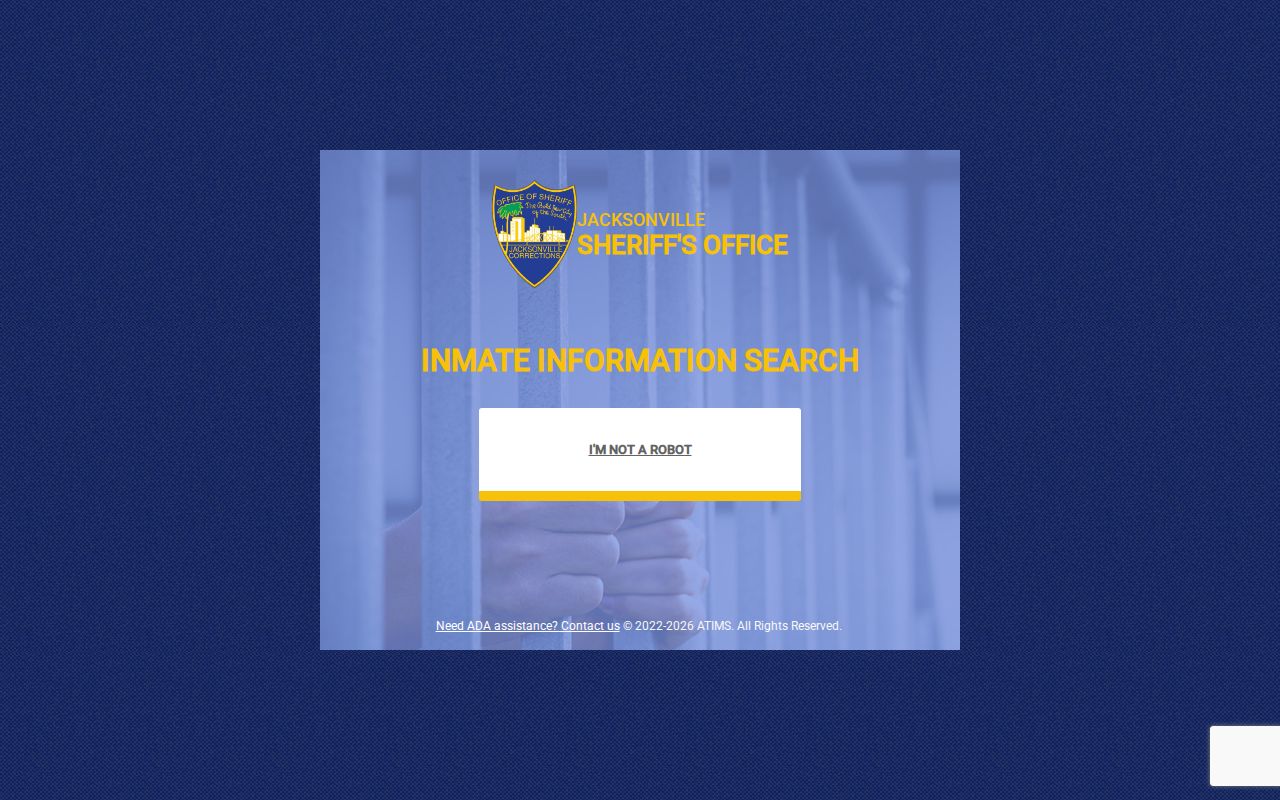
Think of it as a person lookup rather than a wall of faces, and check any result against the later court record.
Duval County Busted Jail Roster
The official system reaches further than a current jail roster. JSO states that it holds current and historical information for both incarcerated and released people. One checkbox changes everything. Ticking the active-in-jail box asks who is in local custody at that moment. Leaving it unchecked widens the net to released and historical local bookings.
| Search control | Use | Required |
|---|---|---|
| Booking or jail number | Narrow identifier for one intake record | Use alone when known |
| JSO ID | Agency identifier that can separate similar names | Use alone when known |
| First, middle, last name | Name search, with middle name used to narrow | Begin with first and last |
| Search Only Inmates in Jail | Restricts results to present local custody | Optional and question-dependent |
Start with the narrowest reliable identifier you can confirm. Match the booking date and the arresting agency before opening a detail record. JSO allows mugshots to be viewed, though photo availability depends on the record. A detail page may also list physical descriptors, charges, bond, holds, court facts, release status, and visitation information. JSO makes no official promise about how often data refreshes. Check the portal again rather than trusting a private site's update claim.
A Jax Sheriff app was once reported, but the current official site no longer promotes it. Its support and store status remain unverified. Do not treat it as an app-only mugshot channel. The web portal and the Public Records Unit are the verified official routes.
Recent Duval County Busted Bookings
Past JSO's verification layer, the inmate app keeps Recent Bookings and Release Log as separate functions. The selectable periods and timestamps aren't fixed. Read the live label when the report opens. Use whatever dates or multi-day interval the interface offers. Calling it a standard 24-hour, 72-hour, or weekly county window would be a guess.
Each report answers a different question. A Recent Bookings report covers admissions during its stated interval. The active roster reflects custody at the moment of search. The Release Log tracks exits from local custody, whether by bond, court order, transfer, or a completed sentence. These lists aren't interchangeable. Someone can be booked and released before a current-only search runs, yet a person with an older booking may still sit in custody.
State schedule GS2 describes what commitment and release lists may contain: date, booking number, name, demographic fields, charge, court, officer, bond, release method, and return date. The public JSO report doesn't guarantee every field appears. For older events, use the broader named search, JSO records, and CORE. Completed Calls for Service tracks police activity, not bookings.
Note: Record the live report window and timestamp before calling any booking recent, since JSO publishes no fixed refresh guarantee.
Where Duval Busted Mugshots Appear
Official sources come first. They answer different questions. Private sites and news outlets can still help you locate a claimed event. Be careful, though. Their pages may be incomplete, duplicated, stale, or still online after a release or dismissal. Recheck every identity, custody statement, charge, and outcome through JSO and CORE.
| Channel | Photo? | Status and use |
|---|---|---|
| JSO inmate search | Record-dependent | Official local current and historical booking search. |
| JSO records request | Original image may be requested | Official fallback for a specific event and retained record. |
| FDC offender search | State offender photo | Official state-corrections record, not the county intake feed. |
| CORE court search | Not a mugshot source | Official docket, filings, orders, and disposition. |
| Local news | Varies | Selected reporting, not a complete booking list. |
| Private Duval pages | Varies | Unofficial republication that requires official confirmation. |
News4JAX, Action News Jax, First Coast News, and the Florida Times-Union cover selected local events. Recently Booked and Arrests.org maintain Duval sections. Arrest Florida offers a statewide Duval filter. Approach Mugshots.com with caution. Its nominal Duval path has displayed Jackson County place names. No authentic Duval edition of Busted Newspaper or Mugshots.zone has been verified either. Mugshots in the News explains this landscape and the story-to-record check.
Duval Arrests in FDC Records
The Florida Department of Corrections search matters only once a person reaches the state corrections system. It doesn't cover every Duval arrest. It also skips county sentences, pretrial stays, local releases, and federal transfers. Search by first and last name or by a six-character DC number. Name matching begins with the letters entered, an alias control can broaden it, and a filter can limit results to people with photos.
An FDC photograph is a state offender identification image. It may be newer than the Duval intake photo. Don't label it as today's county mugshot. The detail page supplies the state record and photo where one exists. If the search doesn't return what you need, FDC runs a separate public-record center subject to confidentiality and redaction rules.
The FDC interface shown below makes its custody boundary and photo filter visible.
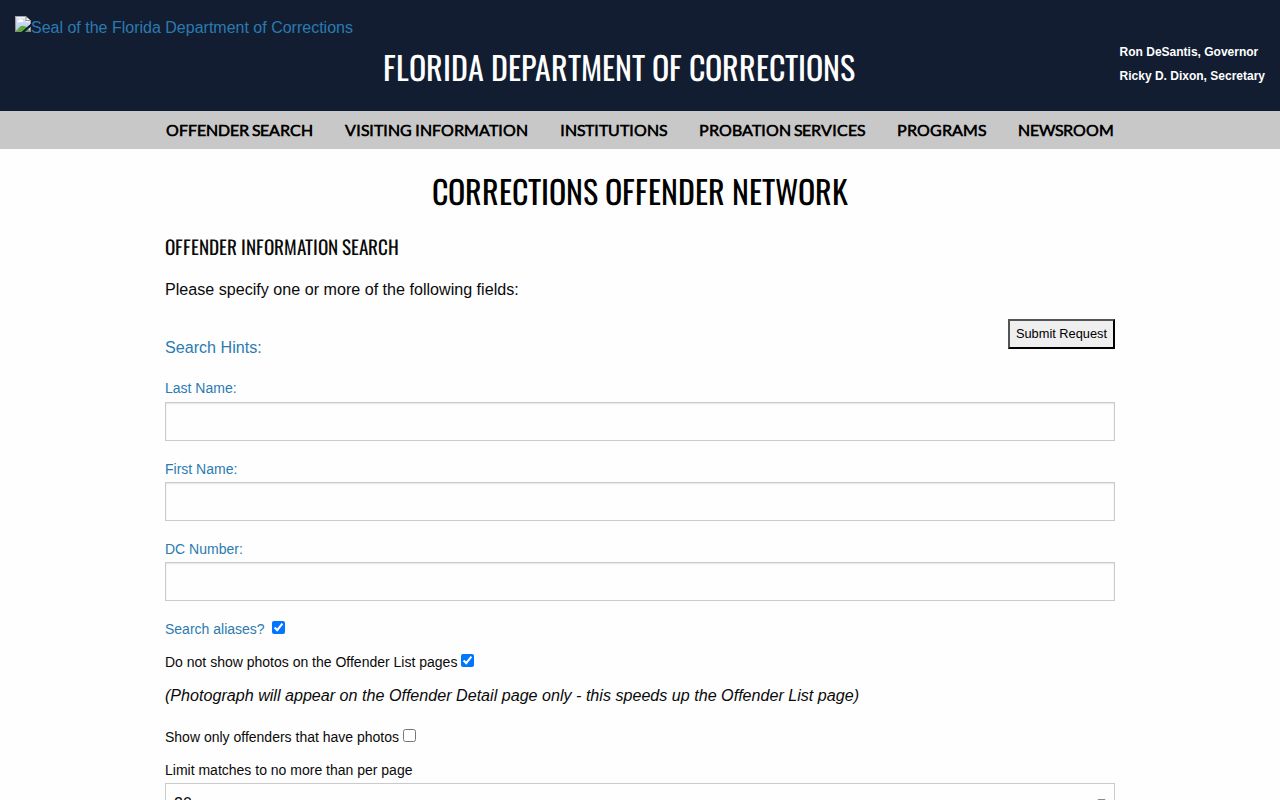
Let the FDC result handle state corrections questions. Then return to CORE for the Duval court history behind the local case.
Duval Booking Charges Reach CORE
Arraignment is the point where the accused is told the formal charge. The Duval Clerk says a person released on bond or by a judge receives the next arraignment date at release. Keep one thing in mind. The filed charge can differ from what the booking record showed. Duval CORE guidance leads to the nonconfidential docket, filings, orders, and final disposition.
A Florida court security matrix controls public online access. Visibility depends on user role, case type, document type, and sensitive content. A document you can't see doesn't mean no case exists. It may require a request to the Clerk criminal department at 501 W. Adams Street. E-Notify can also take up to three business days to populate a new or reopened case, and its reminder isn't official notice.
- Booking
- The intake process that creates the local identity and custody record.
- Arraignment
- The hearing at which the accused is informed of filed charges.
- Bond
- A release condition, not a ruling on guilt.
- Disposition
- The recorded way the court resolved a charge or case.
- Expunction
- Court-ordered relief that generally destroys or obliterates eligible agency records, subject to statutory exceptions.
Duval Custody and Court Alerts
No single alert system shows the whole picture. Florida VINE runs around the clock at 1-877-846-3435. It gives inmate status and notifications by phone. FDC Victim Services is a separate state-law program, and signing up with VINE doesn't enroll you there. The Duval Clerk's E-Notify handles criminal-case events, though its population delay means reminders can run late, and the system itself warns it isn't official notice.
Jacksonville Beach CodeRED sends emergency and community alerts, not arrest notices. JSO's social accounts post selected news, wanted appeals, and safety updates, but skip most bookings. Match the tool to the question. VINE covers custody changes, FDC Victim Services covers its state program, E-Notify tracks docket events, and CodeRED handles Jacksonville Beach emergencies.
Duval Arrests in Federal Custody
Federal custody runs on its own system. The BOP Inmate Locator covers federal inmates back to 1982. Search by register number or name. Age, race, and sex work as optional filters. Results show location and release details, but no photograph. The ICE Online Detainee Locator finds identifiable adults currently held by ICE, plus certain people released within a stated window. Photos are missing there too. Remember that ICE detention is civil immigration custody, not a criminal matter.
A blank BOP result does not mean someone is free. The person could sit in pre-designation federal custody, another jurisdiction, or supervision. ICE entries can lag or be suppressed. Minors never appear. These tools answer a later custody question only, so they cannot replace the JSO booking search or the Duval court docket.
The locator image below shows the fields BOP accepts. It does not contain Duval County busted mugshots.
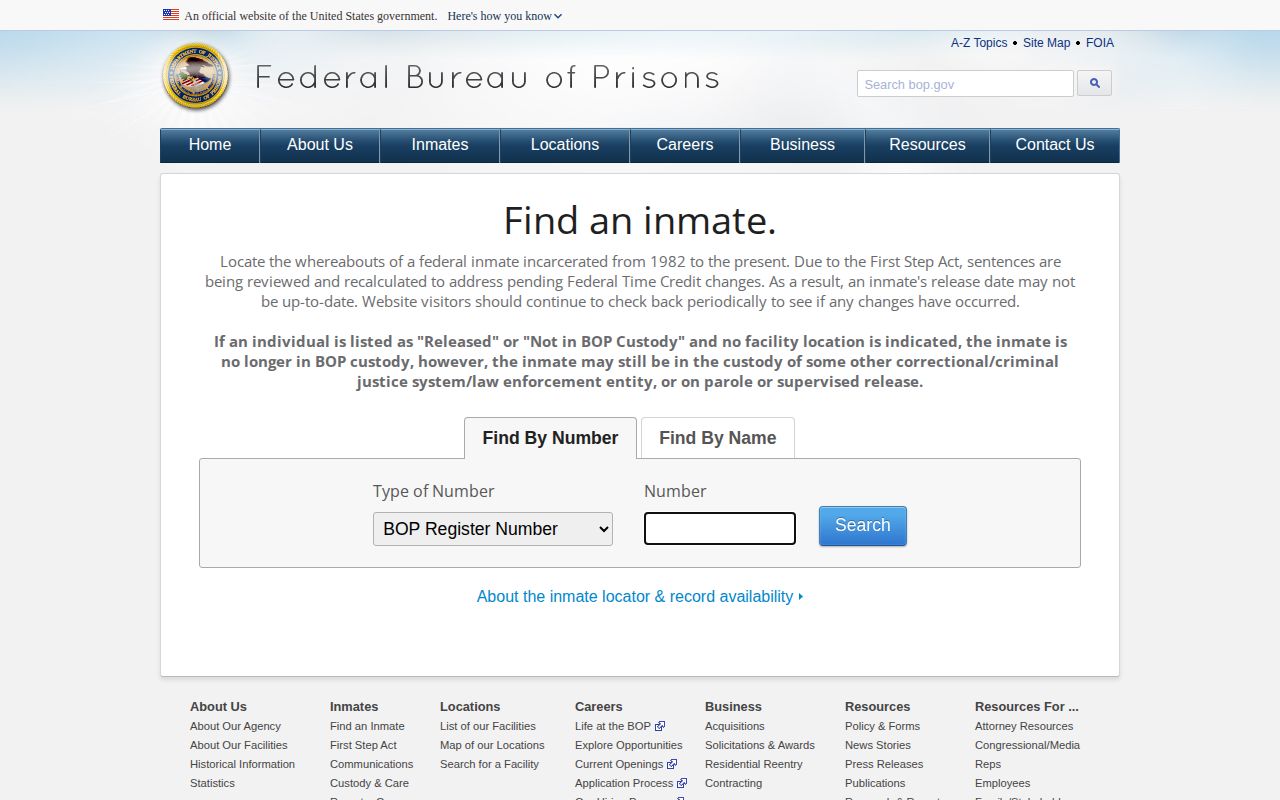
Call a federal hit what it is: a BOP custody record, not evidence of current Duval jail status.
Duval Booking Status Crosswalk
One page cannot cover every stage of a person's path. Use the system matched to the status you need, and note the date of any current-custody lookup.
| Status | Best source | What it establishes |
|---|---|---|
| Just booked | JSO Recent Bookings or named search | Local admission when the record has populated. |
| In Duval custody | JSO search with active-only selected | Local custody at lookup time. |
| Released locally | Broader JSO search or Release Log | Exit from Duval custody, not case disposition. |
| Pretrial program | Duval Pretrial Release Register | Selected program participation, not all defendants. |
| State corrections | FDC Offender Search | State custody or supervision and a state photo. |
| Federal or ICE custody | BOP or ICE locator | The specific federal custody slice, without a photo. |
| Court outcome | Duval CORE | Filed charges, orders, and disposition. |
Duval County Busted Mugshot Cities
Consolidation split report ownership from booking ownership here. JSO wears three hats: Jacksonville police, county sheriff, and county corrections. Jacksonville Beach and Atlantic Beach kept their own police departments. A municipal report may live with the city police records unit. John E. Goole, meanwhile, provides the shared county booking record and photograph.
- Jacksonville Busted Mugshots covers JSO policing, completed calls versus bookings, and the common inmate system.
- Jacksonville Beach Busted Mugshots separates JBPD reports from JSO intake records and explains the city's published request terms.
- Atlantic Beach Busted Mugshots explains the direct ABPD records route and the county booking handoff.
Whatever the city, check the arresting-agency field first. A city police report captures the municipal event. The county record documents the booking. CORE carries the court history that follows. Keep those layers apart, and a municipal incident report, a county booking photo, and a court result will not blur into one fixed record.