
Official Duval County Arrest Sources
Start with the booking record itself. After a local arrest, the Jacksonville Sheriff's Office processes people at the John E. Goode Pretrial Detention Facility and logs them in its system. The Inmate Information Search reaches both current and older local bookings, and some entries include a mugshot tied to that specific record. Search by name, booking number, or JSO ID, and match the arresting agency and date before trusting a match. Not every entry shows a photo.
Then move to the courts. The Duval Clerk runs CORE, which holds nonconfidential filings, orders, and case outcomes. Reporters often quote an arrest report early, while the State Attorney is still deciding what to file, so the docket is where the real charges appear. JSO press releases and social posts are selective too. They publicize, not catalog. Booking record first, court docket second, and the picture comes together.
Duval County Crime News Outlets
Four big local outlets cover crime and public safety. None of them works as a Duval County arrest log. Their stories lean on agency statements, arrest reports, court files, State Attorney material, interviews, and original digging. The Jacksonville Daily Record is different. It keeps a tighter focus on courts, law, and business.
| Outlet | Coverage and cadence | Photo pattern | Boundary |
|---|---|---|---|
| News4JAX/WJXT | Frequent daily, event-driven crime reports | JSO images, scenes, video stills, or stock art | Editorial selection, not a booking gallery |
| Action News Jax | Daily and breaking local reports | Agency handouts, video, social images, family or attorney images, or stock | Not an exhaustive arrest list |
| First Coast News | Frequent event-driven crime reporting | Varies with releases, records, video, and interviews | Live routes and access can change |
| Florida Times-Union | Event-driven public-safety journalism | Police, court, source, and scene images vary | May be paywalled; not a roster |
| Jacksonville Daily Record | Court, legal, and business coverage | Not centered on booking photos | Not a mugshot blotter |
Jacksonville gets most of their attention. Major countywide events draw the rest. Jacksonville Beach and Atlantic Beach appear rarely, only when something big happens there. No outlet runs a complete city arrest feed. For verification, use the municipal police report, the JSO booking record, and the CORE case file.
Note: A missing mugshot in a news story does not mean no booking image or arrest record exists.
Duval County News Image Patterns
The News4JAX crime landing page shows the event-driven layout typical of Duval County news coverage.
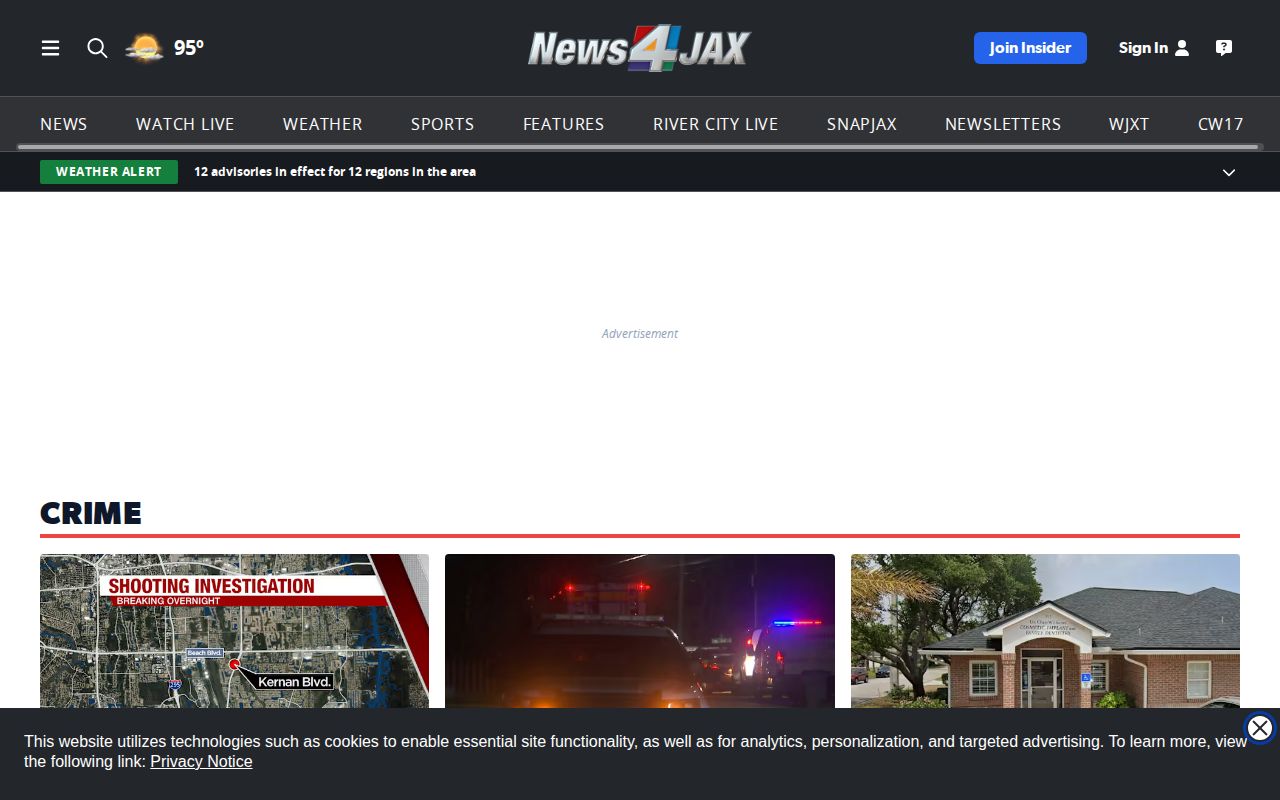
That landing page mixes breaking reports with ongoing public-safety stories. It tells you nothing about how many people were booked that day. Trace every image to the source named in its credit.
The Florida Times-Union crime page offers a separate newspaper angle on Duval County arrest and court reporting.
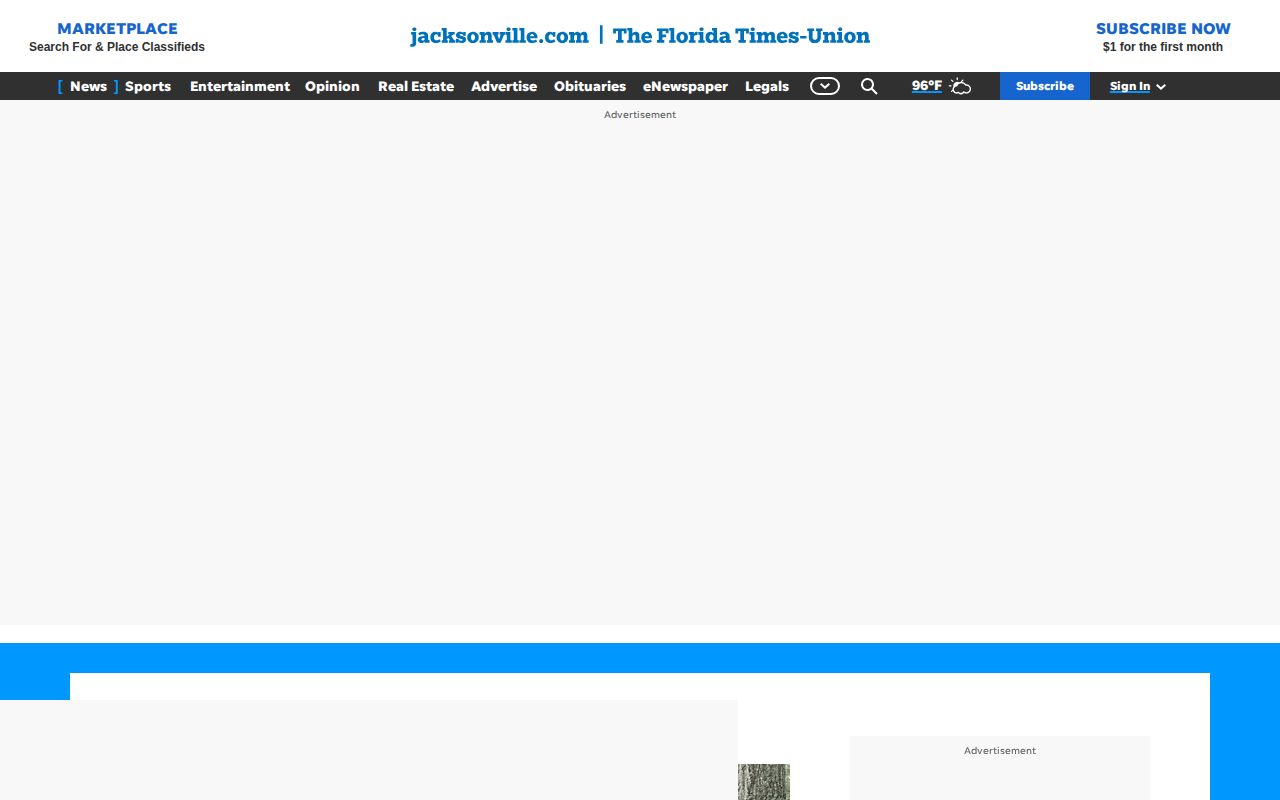
Times-Union stories can pull from police reports, prosecutors, defense attorneys, witnesses, and court files. That reporting role is far broader than a same-day booking report, which simply lists who came in.
How Duval County Mugshots Reach News
Where do news images come from? Sometimes an agency release, a reporter's records request, or the official JSO inmate system. Sometimes nothing tied to booking at all: body-camera footage, surveillance video, a scene photo, or stock art. Read the caption and the source credit every time. Florida's public-record laws open a lot of doors, but they do not force every image online or expose every field without redaction.
If an image's source is murky, ask for the actual record. JSO Public Records handles those requests. Be precise: give a full name, booking date, booking number, and JSO ID if you have it. That separates the original intake photo from whatever copy ran in a story. News articles also stay online long after custody status or charges shift. The live record and the docket remain the final word.
Note: An agency-supplied photograph fixes identity at intake; it says nothing about how a case later resolved.
Duval County News Is Not a Feed
JSO's inmate application has a Recent Bookings function plus a separate Release Log. Both sit behind a verification layer. Their live time windows are not fixed public facts, so treat labels like one-day or multi-day with caution. The release report is not a case-outcome report either. Someone can walk out on bond while prosecution moves forward.
The Completed Dispatched Calls for Service page answers a different question. It maps recent police activity and refreshes often. But JSO states plainly that it is incomplete and not an official crime dataset. A dispatched call is not proof of an arrest. It should never stand in for a booking log. For older cases, search historical inmate records by name, request the JSO file, then check CORE.
The Duval County booking and roster search walks through those custody channels in detail. It separates someone still being processed, someone currently held, a released local booking, and a later state-corrections record.
Note: Completed calls, booking lists, release records, and court dispositions are separate datasets and cannot substitute for one another.
Duval County Recently Booked Listings
Private sites sit at the end of the chain. They come after official and journalistic sources. They drop records, duplicate them, mislabel locations, and leave pages up after release or dismissal. The Recently Booked Duval page is one such county section. Weigh it lightly against the primary records.
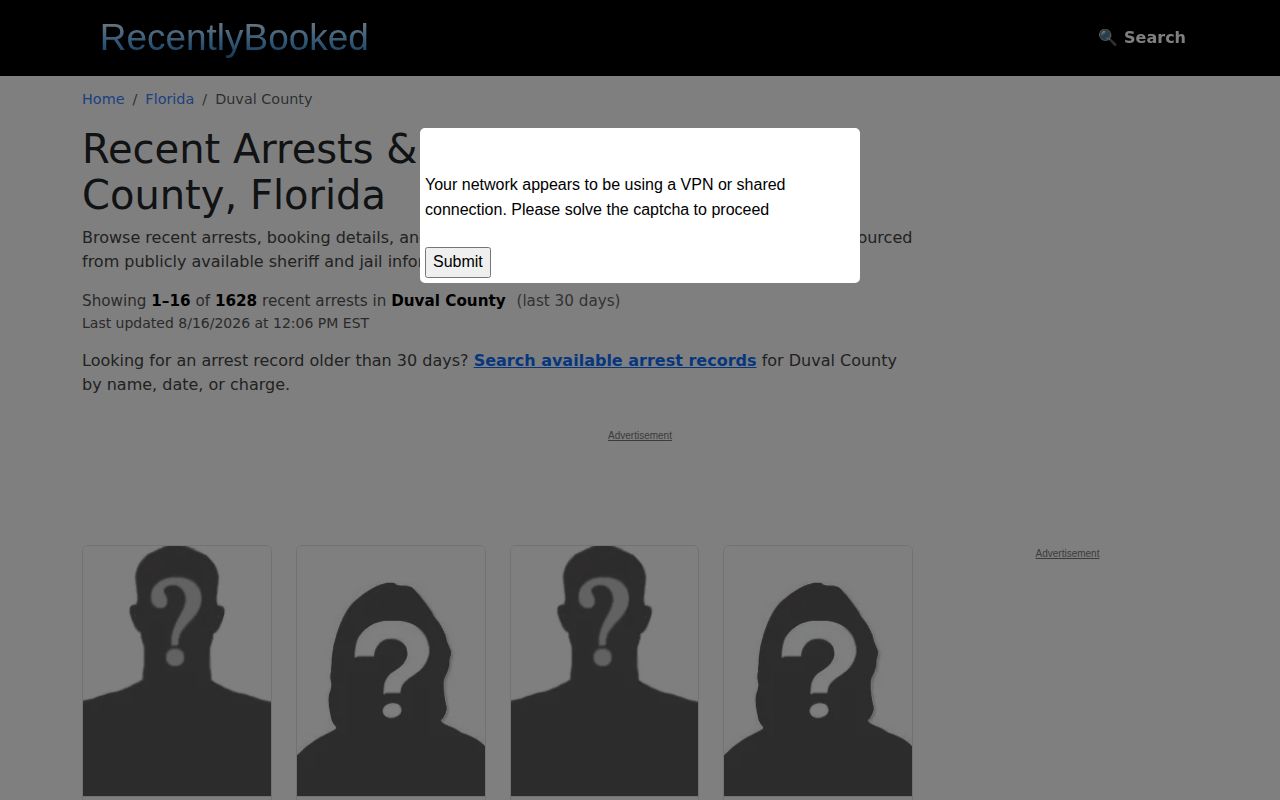
Duval County booking feeds update several times a day. The county itself keeps mugshot images out of that stream, though. So a fresh list of booked names arrives with no photos. JSO runs a separate person-level portal. That is where a booking photo can appear for someone you look up by name.
For a broader view, Arrests.org's Duval section lists booking dates and charges in one place. You can sort by day and filter by agency or city. Daily totals help you spot busy stretches at a glance. One caution: the site attaches its own accuracy notes. Treat it as a starting point, not the last word on any name.
Duval County Arrest Florida Listings
The Arrest Florida Duval filter was captured as a genuine statewide filter.
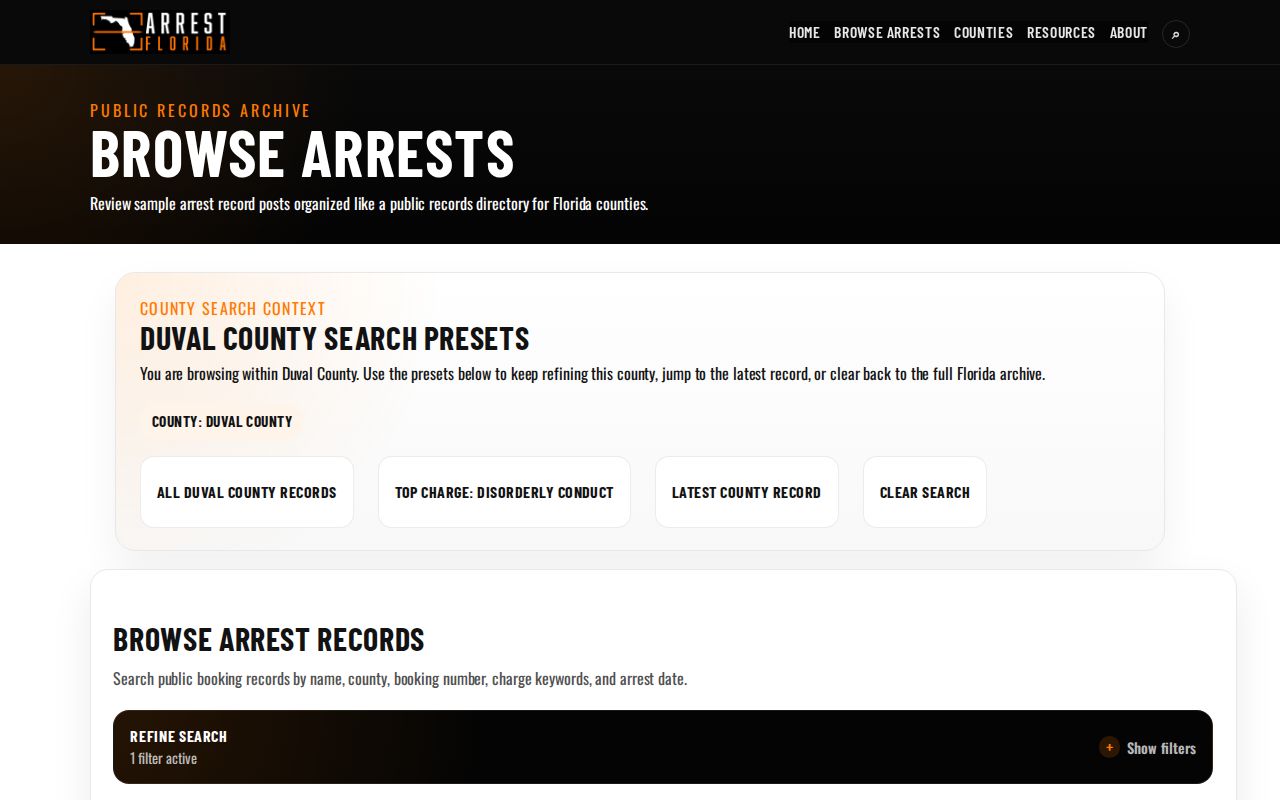
This section pulls together JSO agency entries. Treat it as supplemental. It works best as a starting point, not a final answer. Names, charges, dates, and outcomes all need a check against official sources before anyone acts on them.
Duval County Mugshot Taxonomy Warnings
The nominal Mugshots.com Duval page illustrates why taxonomy must be checked.
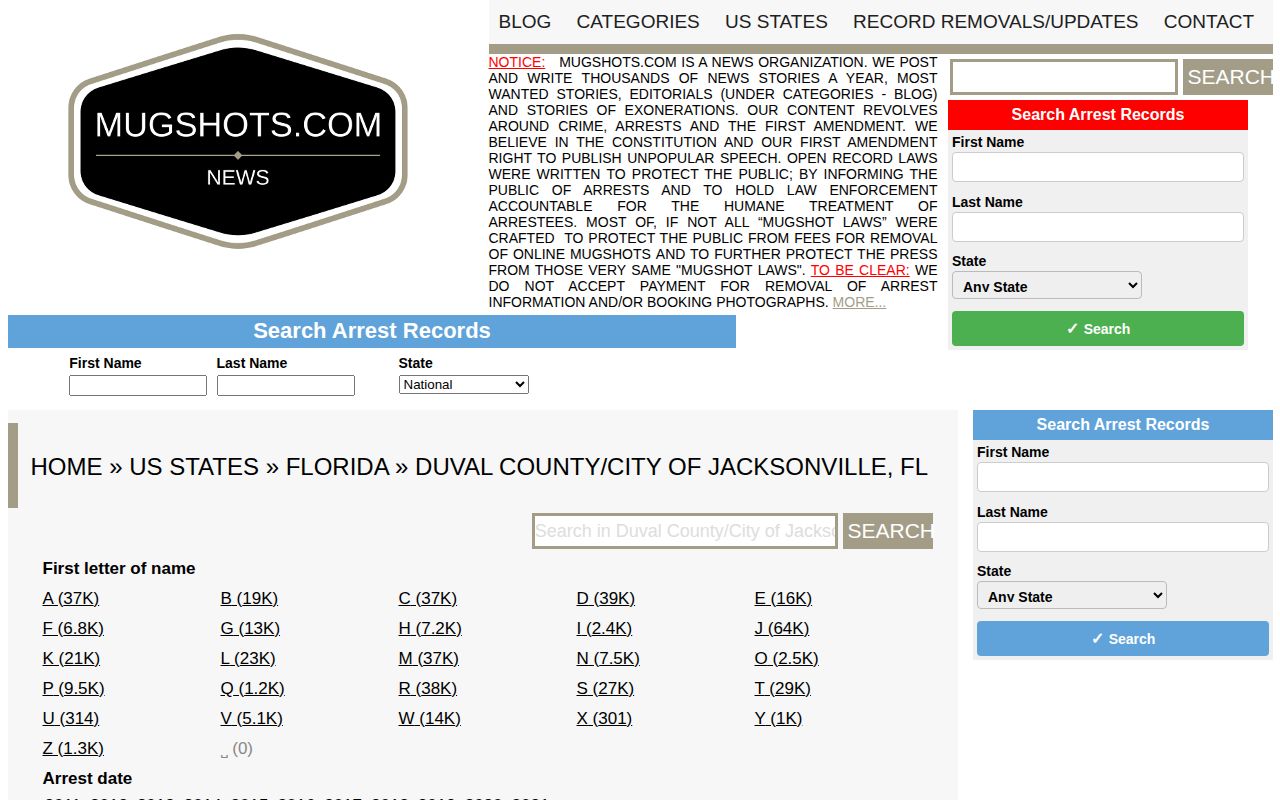
One indexed path surfaced Jackson County place names such as Marianna. Don't lean on it as a live Duval County feed, because it points somewhere else entirely.
No genuine Busted Newspaper edition for Duval County, Florida has turned up, and no Mugshots.zone page specific to the county exists right now. That could change, so a site serving some other county should never stand in as a Duval source.
Trace Duval County News to Records
Verify before you trust a headline. Grab three things from the article: the exact name spelling, the date of the incident, and the agency that made the arrest. Those details carry you into the county's official files. From there, work through each record in its proper order instead of jumping around.
- Search JSO by the narrowest reliable identifier. Compare the booking date, JSO ID, arresting agency, and custody status instead of relying on appearance.
- Open the booking detail. Treat every listed charge as the charge entered at intake, and note that a photo may be absent.
- If the record is missing, retry after intake and request the exact arrest record or original booking photograph from JSO.
- Search CORE by party or case identifier. Read the docket, later filings, orders, and disposition rather than treating release as dismissal.
- Return to the story only to compare updates and attribution. A news page may not revise at the same pace as the official case.
This step-by-step habit guards against two frequent mistakes. One is identifying the wrong person from a photo alone. The other is assuming the charge in the first news report is how the case ends up.
Duval County Arraignment Changes the Record
Arraignment is where the court formally tells a person what charges were filed. Under Duval Clerk guidance, anyone who bonds out or gets released by a judge leaves with the next arraignment date already assigned. Keep in mind that a breaking story usually repeats the booking label. Prosecutors may file something different, and the docket will show those later changes.
For nonconfidential cases, CORE serves as the ongoing record. What you can see depends on your role, the case type, the document, and court security settings. A missing online document proves nothing. It might predate digital access, or it may simply need a request to the right Clerk criminal department.
The issue matters most when an old booking photo lingers beside a search result or news item. Photos never update themselves as a case moves. Match the record identifiers, track down the arraignment and any later orders, and read the disposition before you describe the outcome.