
Duval County Sheriff's Most Wanted
Start with the official JSO Wanted page when you want to see who the agency is featuring. Entries there can include a photo, a name, and the alleged warrant matter. The site lets you page through cases and submit a tip tied to a specific person. The photos stay on JSO's own system. Cases come and go, so the lineup never holds a fixed count worth quoting in a lasting resource. JSO promises no update schedule, so treat whatever you see as the picture at that moment. One more caution matters here. The list is curated for public help, not built for self-checks. A name absent from the page only means the name was not on that selected page during that search, and paging through every result still cannot serve as official warrant clearance.
The list turns over without a published schedule, so the live page is the only current authority on who appears.
What Duval Wanted Listings Show
JSO keeps its wanted entries lean. The point is recognition. Help a member of the public spot a face and route a tip to the right case. A photograph serves as an identification aid tied to the wanted entry itself. Nothing on the page replaces a booking record or a court file, so read every field with that narrow purpose in mind.
| Listing field | What it means |
|---|---|
| Name | The identity shown by JSO for the selected appeal; confirm exact spelling. |
| Photograph | The image JSO displays with the entry; appearance alone is not enough to identify someone. |
| Alleged warrant matter | The active matter stated by JSO, not a conviction or final case result. |
| Tip control | The case-specific route for information about the listed person's location. |
| Paging | The controls used to move through the selected public entries. |
Keep outside details away from a listing. Social posts, private databases, and memory all invite mistakes. Similar names and old photos make mistaken identity a real risk. When you need later arrest or custody information, the Duval County busted mugshots home page explains the official JSO inmate system. An arrest after a wanted appeal simply opens a new booking record.
Use the Duval Wanted List
Using the page safely takes three steps. Read the current official entry. Avoid contact. Then send credible location details through the stated channel. A screenshot from last month proves nothing about a warrant today, so go back to JSO's live page each time. Status and appeals can shift without any notice.
- Open the official JSO Wanted page and note the time of the check.
- Read the exact name and alleged warrant matter shown by JSO. Use the photograph only as one identifying clue.
- If the person is recognized, keep a safe distance. Do not follow, detain, confront, or warn the person.
- Send useful location details through the case tip control, JSO non-emergency line, or Crime Stoppers route that fits the situation.
- Call 911 only for an immediate emergency. Let law enforcement assess and act on the information.
A tip should focus on current, first-hand facts such as a location, direction of travel, or vehicle description. Do not publish an accusation online or encourage others to intervene. JSO, not a private viewer, is responsible for confirming identity and warrant status before taking action.
JSO Wanted Page Launched in 2026
The current Wanted and Missing Persons pages went live on June 3, 2026. That date matters more than it might seem. Older articles may describe a different setup or point readers toward stale addresses. JSO's announcement framed Wanted as a place to view selected active-warrant cases and submit information about a listed person, and it never claimed the page indexes every Duval County warrant. The official JSO launch notice documents both the service and its case-level tip design.
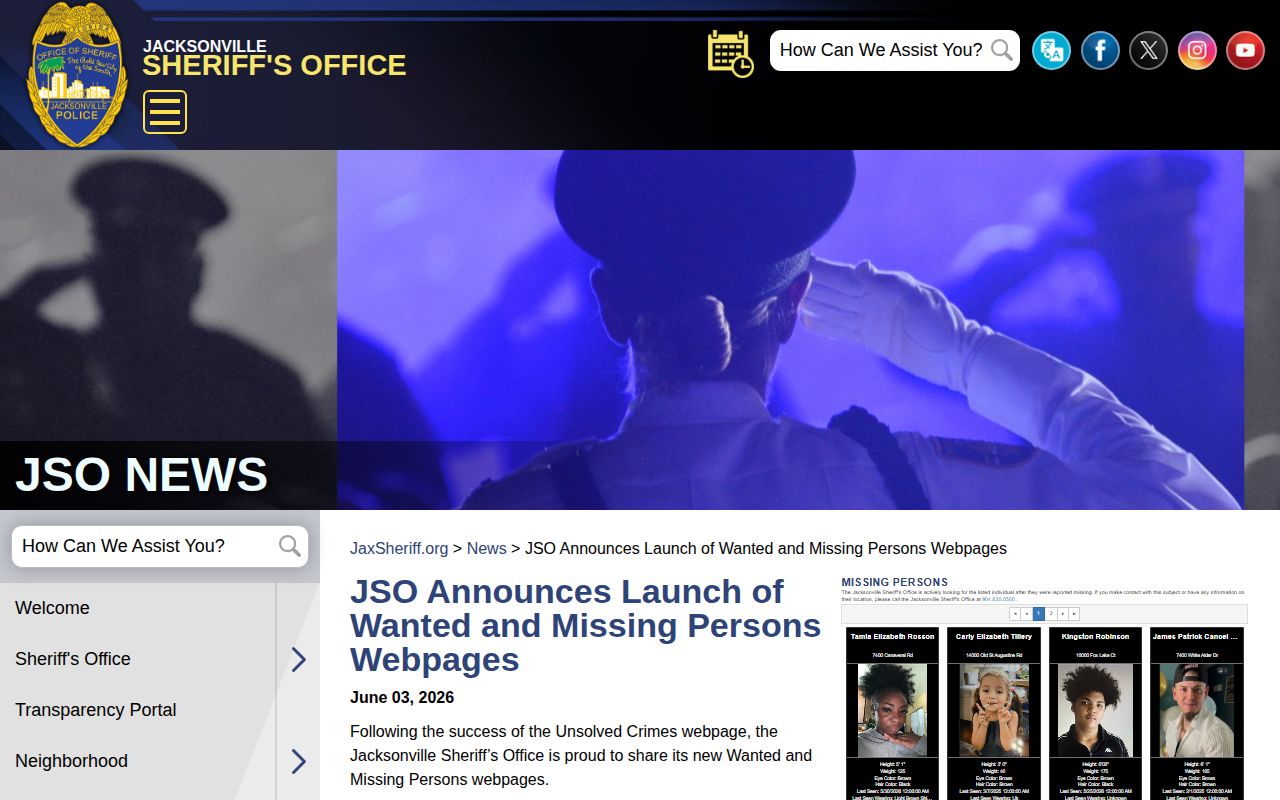
The launch notice fixes the date and the function of the service without hosting any wanted person's photo here. Entries change too fast for a count to hold. The live page remains the source for what is visible now.
Note: The Wanted page is a selected public-assistance list, while a warrant question about a specific person requires court and agency confirmation.
Check a Duval County Warrant
JSO offers no comprehensive public warrant self-search. Start with Duval CORE to look up the party and case docket. What you can see there depends on timing, case type, document type, and court security rules. A warrant or capias may surface in the docket. A blank result, though, is not clearance, since new material can lag and protected content may stay hidden from general users.
- Search CORE using the exact name and any known case identifier. Compare several identifiers before treating a result as the same person.
- Open the docket and read later entries. Look for court activity without assuming that a short label explains current status.
- When the online record is unclear, contact the relevant Duval Clerk criminal department or court for the lawful next step.
- If the concern affects the person searching, consult a lawyer for advice about safe resolution and appearance instructions.
- Use JSO's non-emergency line for agency confirmation or direction. Do not rely on the Wanted page's silence.
JSO works with internal e-Warrants behind the scenes. The Florida Crime Information Center and National Crime Information Center systems feed into that work too. None of it opens to the public. Guessing at their contents through an unofficial site gets you nothing official. Confirmation is the real goal, and it runs through counsel, the court, the Clerk, or JSO itself.
Duval County Warrant Types
JSO's annual reporting lays out several kinds of process its Warrants Unit handles. Those distinctions matter. A single public webpage can't settle every warrant question, and that's part of why. The table here sticks to the categories JSO itself identifies. It makes no attempt to judge whether any given process is valid or active in a particular case.
| Process category | Documented handling | Public check path |
|---|---|---|
| Felony warrants | JSO says its Warrants Unit validates felony warrants. | CORE, counsel, court or Clerk, then JSO confirmation |
| Injunctions | Included among matters the Warrants Unit validates. | Relevant court record and direct official confirmation |
| Writs | Included among the court process handled by the unit. | Relevant court or Clerk department |
| Custody orders | Included among orders validated by the Warrants Unit. | Court, counsel, and JSO as appropriate |
| Clerk capiases | Various Clerk capias records import electronically into internal systems. | CORE or the Clerk, followed by official confirmation |
A capias is paper from a judge. It tells officers to bring someone into custody. Nothing more. The label alone won't tell you why it issued, where the case stands, or what comes next. For those details, pull the case docket or ask the Clerk of Court directly. Treat each warrant category as a starting point for questions, not a forecast of police action or a playbook for dodging lawful process.
Duval Court Records and Disposition
A wanted notice is JSO's public appeal for help finding someone. The court file is where the case actually lives after that. Prosecutors weigh what to file. At arraignment the accused hears the formal charges, which don't always match what was described at booking. CORE then displays whatever docket activity, orders, and outcome the access rules permit.
For the official route, the Duval Clerk's court-record guidance walks through online access and its limits.
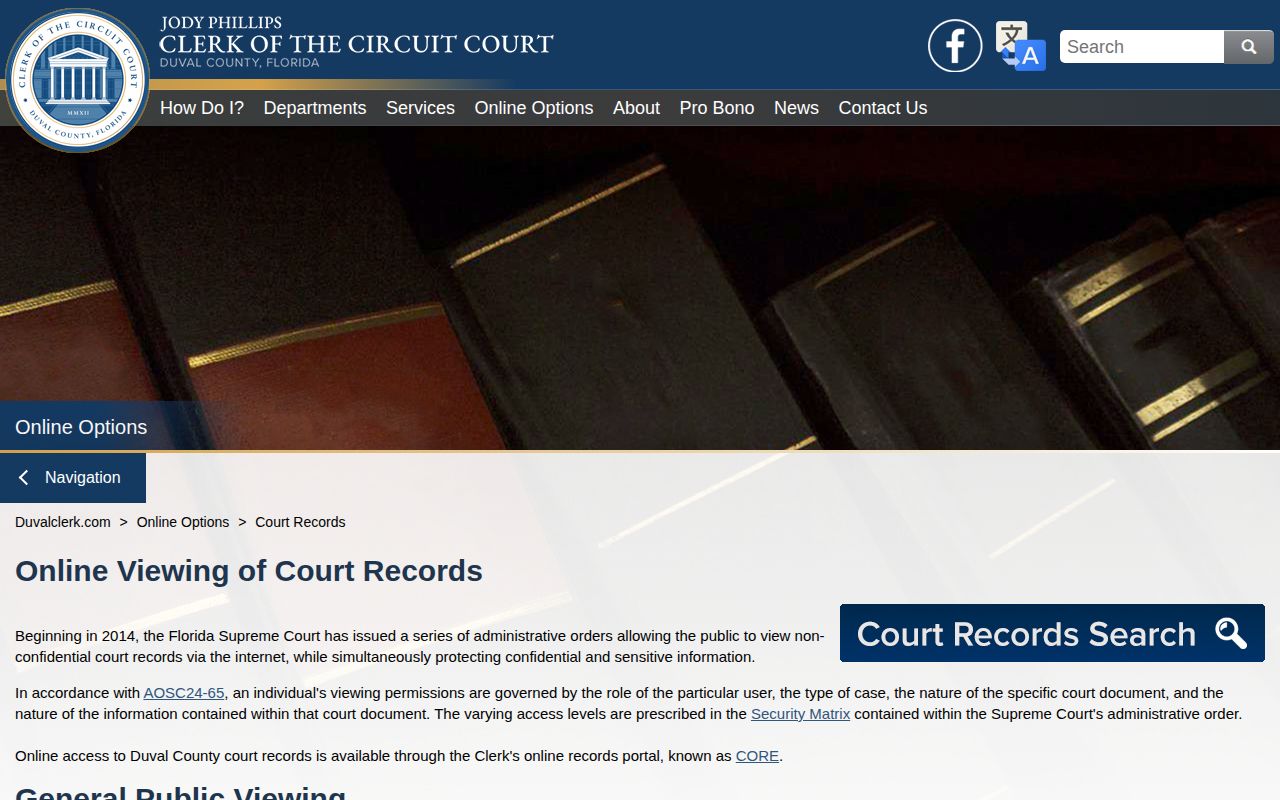
Clerk records fill the gap between a warrant matter and everything that follows it. A nonconfidential document not showing up online doesn't mean the case never existed. Ask the right criminal department for it first.
Custody and case outcome are two different things. A JSO inmate record might show a booking or a release. A release doesn't mean the case was dropped, though. Match the person and case number carefully. Then read the newest official order you can find.
Send Duval Wanted Tips Safely
Where is someone? JSO wants that answer through its non-emergency number. One caution: a tip sent straight to the sheriff can become a public record. For anonymity and a shot at a reward, First Coast Crime Stoppers is the better path, since it runs its own anonymous process and pays rewards itself. Don't expect a direct JSO message to get the same protection. The JSO crime-tip email also goes unmonitored at times.
The official JSO Crime Tips page spells out the do-not-approach rule and lists every reporting route.
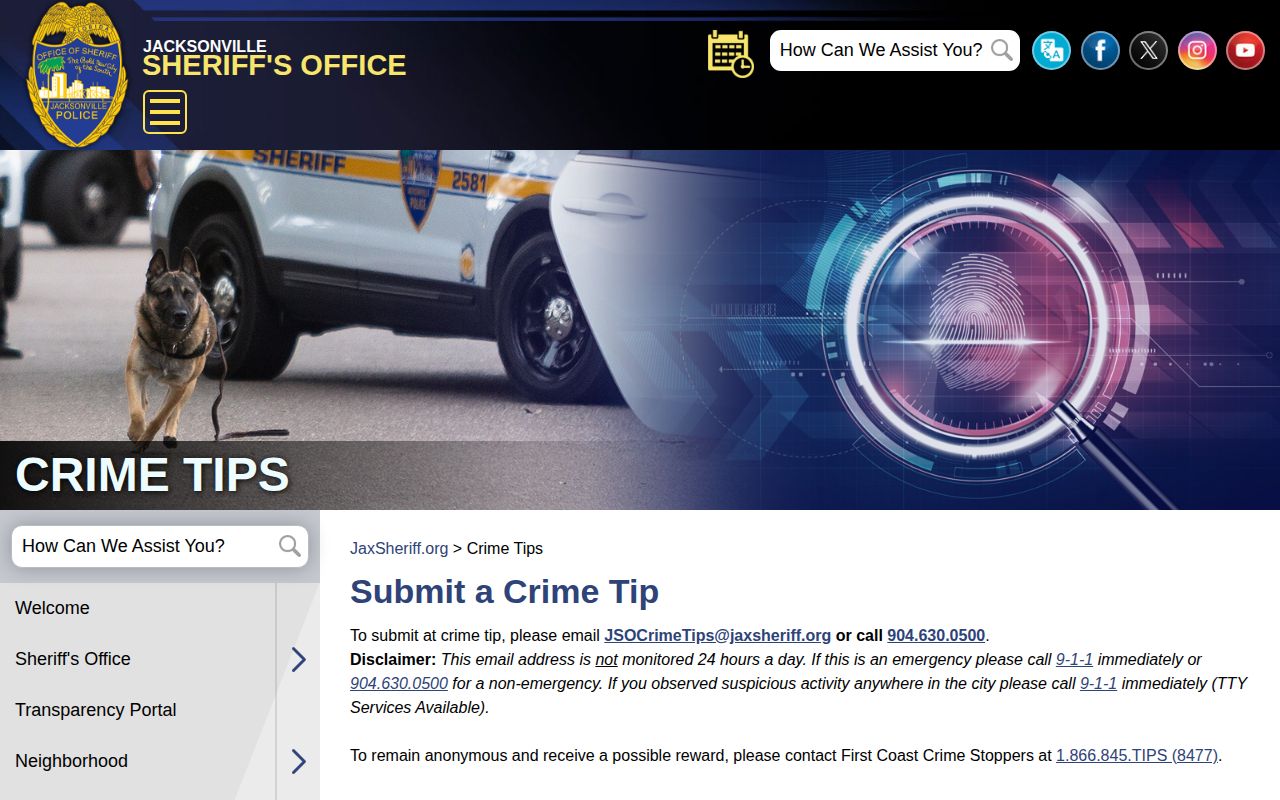
The message is simple: safety beats curiosity. Point what you know toward trained law enforcement, and keep Crime Stoppers in reserve as the anonymous option.
Jacksonville Sheriff's OfficePolice Memorial Building
501 E. Bay Street
Jacksonville, FL 32202
Non-emergency: 904-630-0500
First Coast Crime Stoppers: 1-866-845-TIPS (8477)
Immediate emergency: 911
Safety: Never approach, follow, confront, detain, or warn a person shown on the wanted list. Report credible information and let law enforcement respond.
Wanted Appeals Beyond the Web
JSO links its official Facebook, X, Instagram, and YouTube accounts from the main website. Those feeds sometimes carry wanted appeals and public-safety notices. They're editorial, not warrant databases. Check the live Wanted page before trusting an old post as current. A social share is also no reason to confront anyone or repeat claims nobody has verified.
A few tools get confused with warrant lookups. A Jax Sheriff mobile app was written about back in 2015. No current JSO page confirms it still exists, so don't market it as a mugshot or warrant channel. VINE covers custody status and alerts after a booking, not warrant clearance. E-Notify sends court-event reminders but isn't official notice. Each answers a narrower question than the wanted list itself.